
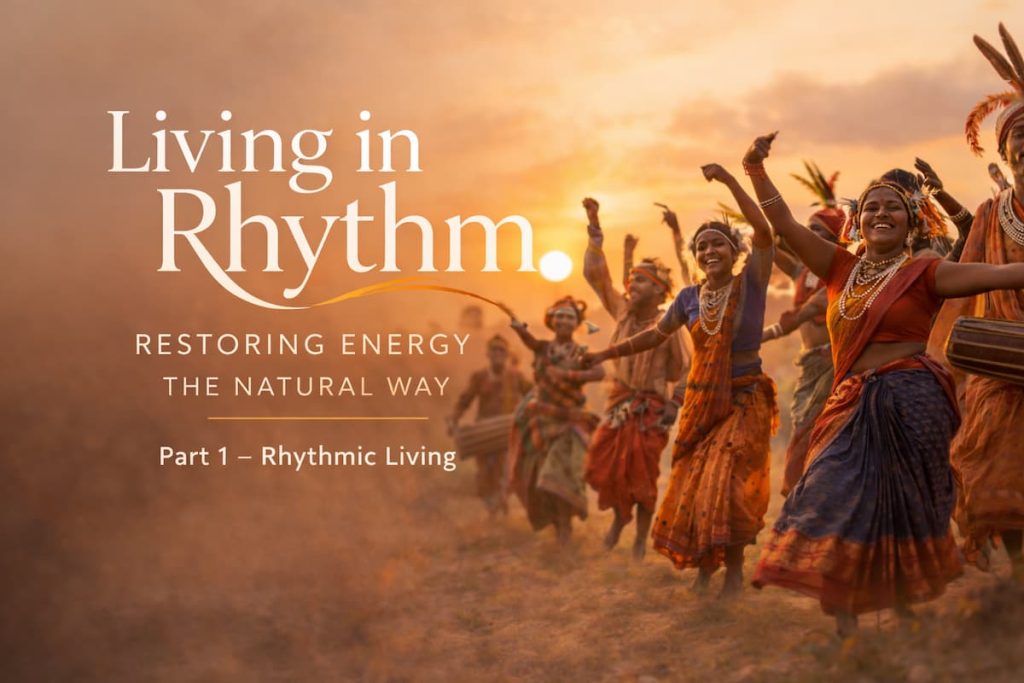
Part 1: Living in Rhythm – Restoring Energy the Natural Way
“योगरतो वा भोगरतो वा सङ्गरतो वा सङ्गविहीनः ।
यस्य ब्रह्मणि रमते चित्तं नन्दति नन्दति नन्दत्येव ॥”
— Adi Shankaracharya
“Whether engaged in discipline or enjoyment, in society or in solitude—
the one whose mind rests in inner awareness rejoices, rejoices, and truly rejoices.”
Reconnecting with the Natural Flow of Life
For most of human history, life moved with a natural rhythm.
People woke with the sunrise, worked with the daylight, gathered in the evening, and rested when darkness arrived. Their days were shaped by the rhythms of nature, breath, and community.
Today, that rhythm has largely disappeared.
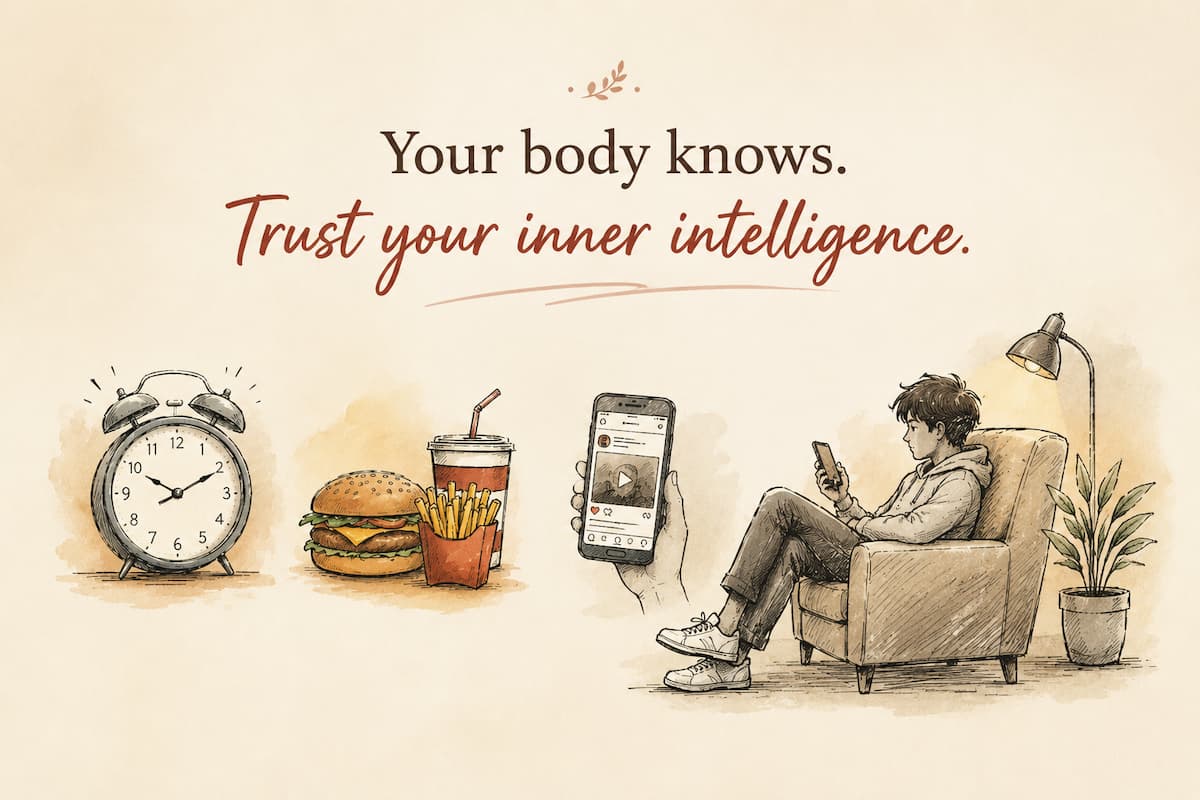
Artificial light, irregular schedules, constant stimulation, and endless digital activity have quietly pushed us out of sync with the cycles that regulate our energy. Many people now feel tired even when they haven’t done much physical work. Sleep feels incomplete, energy fluctuates, and the mind rarely finds stillness.
We often blame stress or workload, but a deeper cause is rarely discussed: we have slowly lost the rhythm that sustains life.
Life Moves Through Rhythm
Nature functions through cycles—the rising and setting of the sun, the changing of seasons, the tides of the ocean, the beating of the heart, and the movement of breath.
The human body is designed to function within these rhythms.
The heart beats rhythmically.
The lungs expand and contract rhythmically.
Hormones follow circadian cycles.
Digestion strengthens and weakens at different times of the day.
Even breath follows a natural pattern—inhale, pause, exhale, pause.
This simple rhythm reveals a profound principle: between every movement there is a moment of stillness. In yogic traditions, this pause within the breath or Kumbhak is seen as a space where the body naturally reorganizes its energy.
When rhythm is stable, the nervous system remains balanced, the mind becomes calmer, and energy flows efficiently. But when rhythm is disrupted—through irregular sleep, inconsistent meals, constant stimulation, and lack of movement—the body begins to lose its natural coordination.
Over time, this loss of rhythm can appear as fatigue, digestive disturbances, anxiety, poor sleep and lifestyle disorders.
The Wisdom of Rhythmic Living
Earlier communities and even today some tribal communities rooted to their traditions intuitively understood how to restore balance after periods of effort.
After work, people did not withdraw into isolation—they gathered at a common place.
They sang. They chanted.
They moved rhythmically. They danced.
They sat together in shared presence.
These practices were not merely social activities. They were ways of reorganizing energy.
Rhythm organizes energy.
Sound harmonizes breath.
Shared presence calms the nervous system.
As voices synchronize and bodies move together, breathing naturally falls into rhythm. This shared rhythm gently regulates the nervous system and brings scattered attention back into the body.
Without studying physiology, traditional cultures understood something essential: rhythm restores vitality.
Breath: The Master Rhythm
Among all rhythms in the body, breath holds a central place.
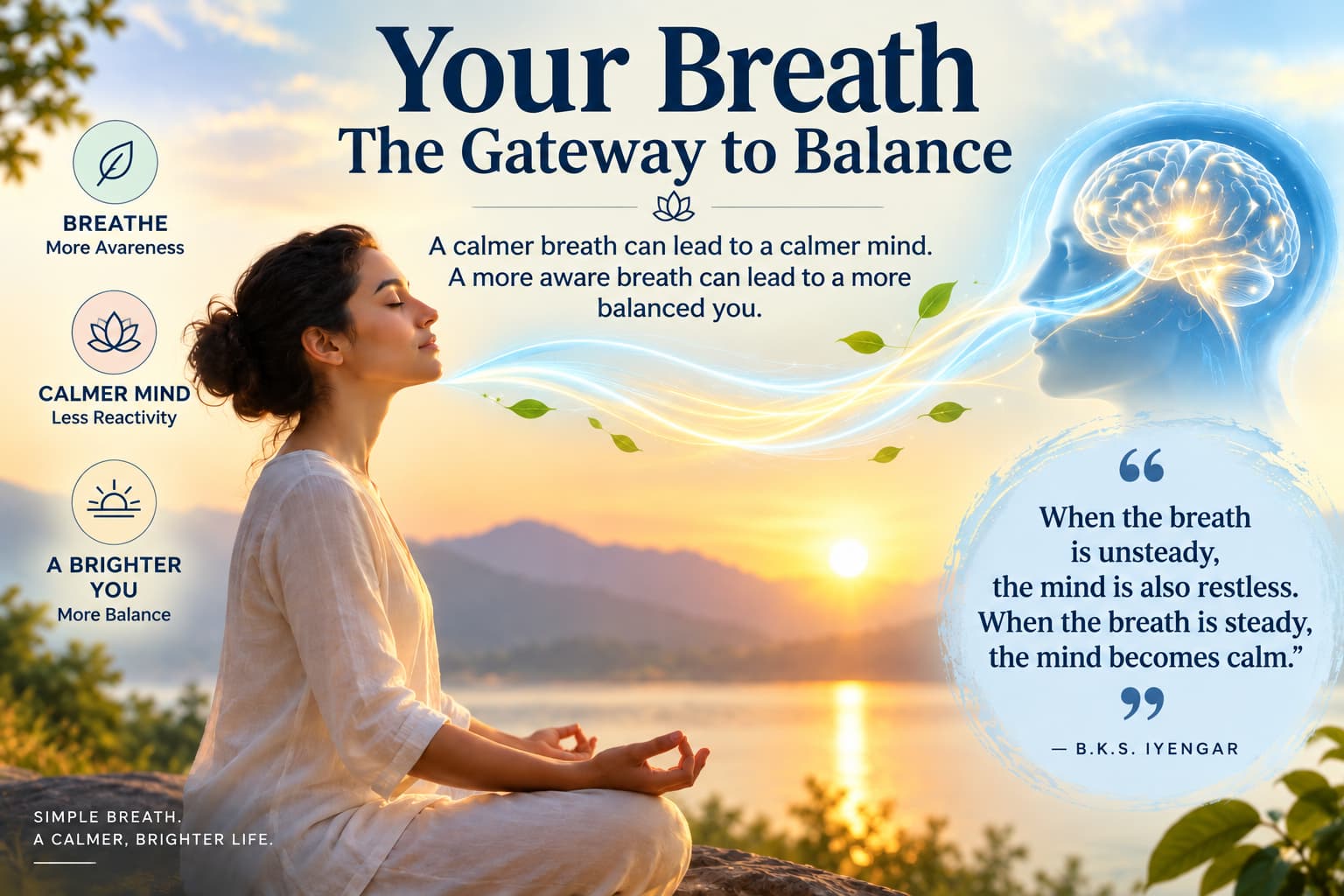
Breath forms a bridge between body and mind. Every emotional state immediately influences how we breathe. Stress makes breathing shallow and rapid, while calmness naturally slows and deepens it.
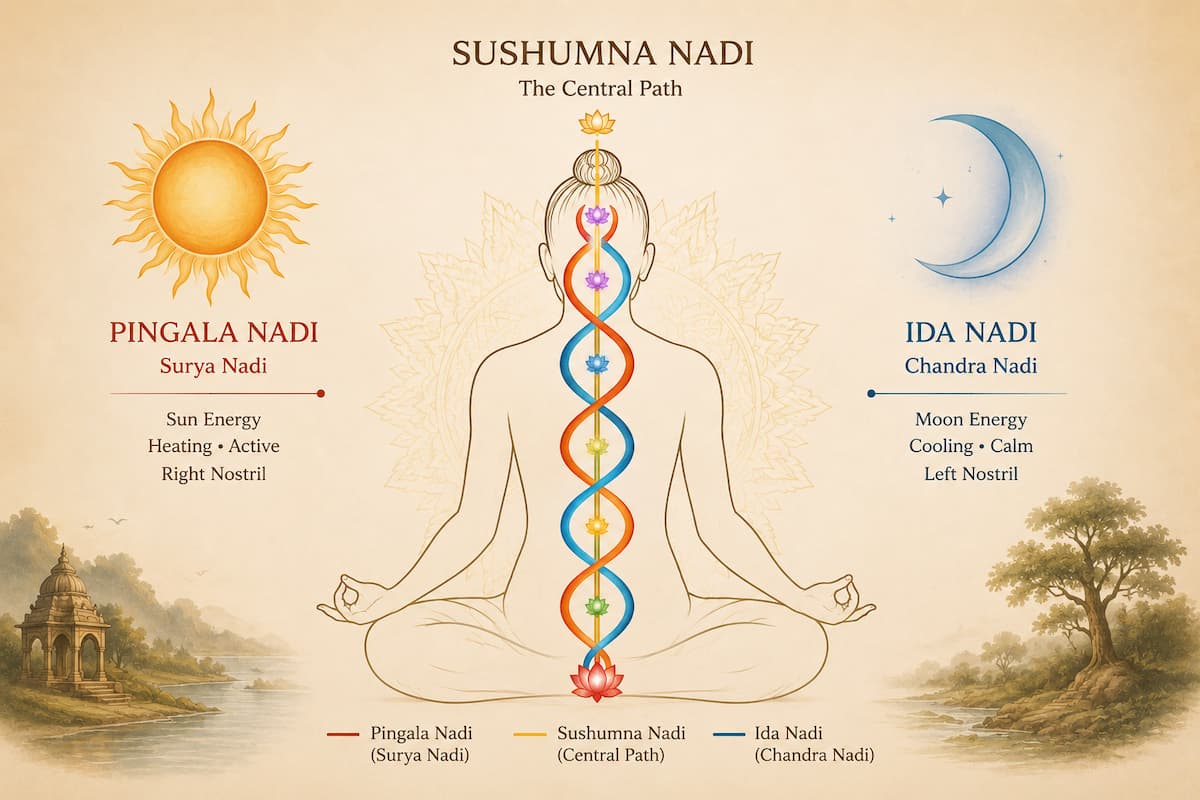
In Ayurveda, breath carries Prana—the vital life force that animates every cell.
When breathing becomes irregular, the movement of prana becomes disturbed, affecting the nervous system, digestion, and mental clarity.
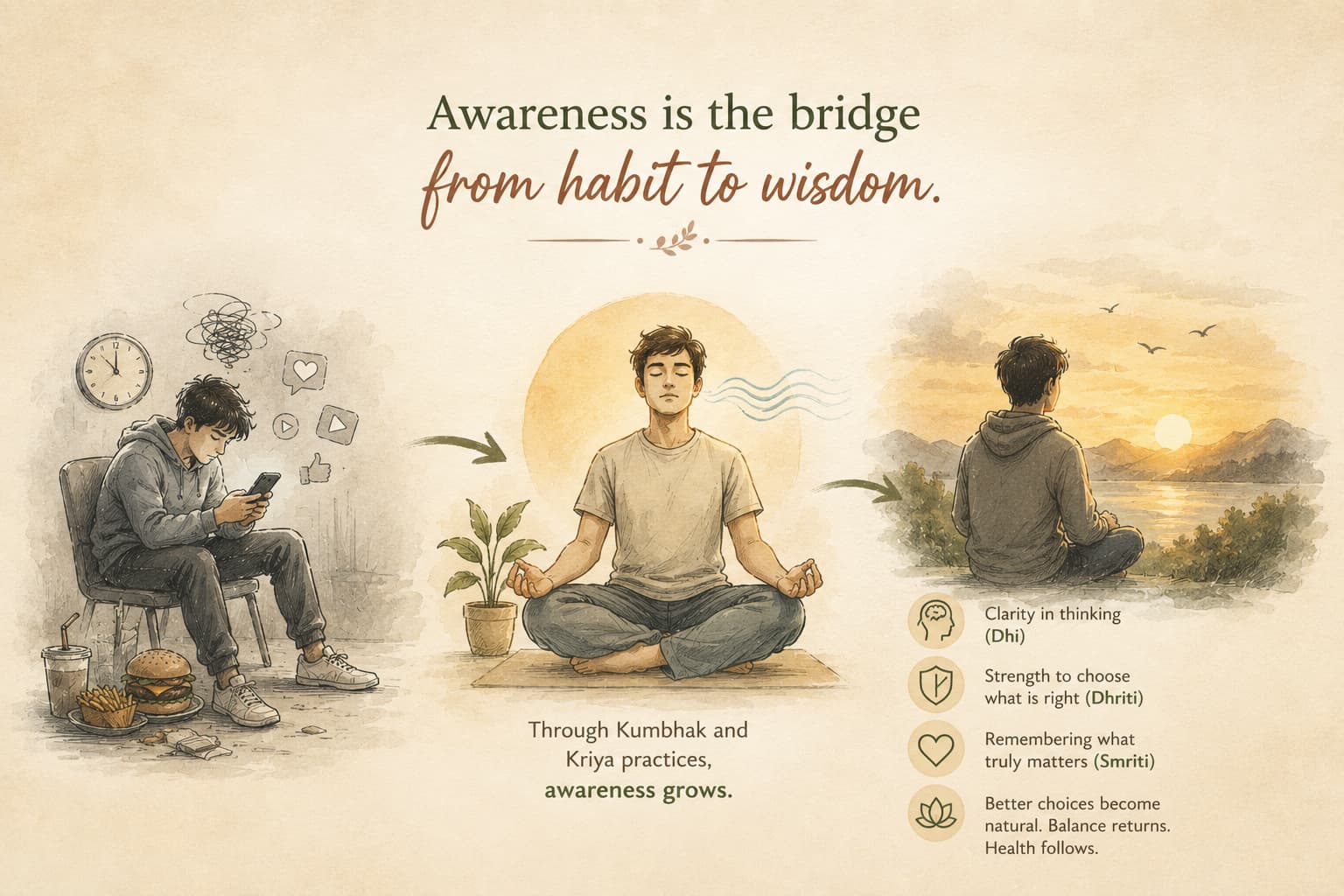
Practices that restore rhythmic breathing help reorganize this vital energy. In yogic traditions, Kumbhak—the natural pause within the breath cycle—creates a moment where breath, body, and mind briefly come into alignment.
In that stillness, energy settles and the nervous system begins to reset.
Returning to Inner Rhythm
The verse by Adi Shankaracharya reminds us that true contentment does not depend on whether we are engaged in work, enjoyment, society, or solitude. What matters is whether the mind rests in inner awareness.
Rhythmic living helps cultivate this inner steadiness.
When breath, movement, rest, and nourishment follow natural cycles, the body no longer struggles to maintain balance. Energy begins to organize itself naturally, and the mind becomes quieter.
The Beginning of a Rhythmic Life
Ayurveda teaches that healing does not begin with complex interventions. It begins with how we live each day.
When daily habits align with natural rhythms, energy flows more easily. Digestion strengthens, sleep deepens, and the mind becomes clearer.
To support this harmony, Ayurveda describes a structured way of organizing our day according to the body’s natural energy cycles. This practice is known as Dinacharya—the Ayurvedic daily routine.
In the next part of this series, we will explore Dinacharya and the Ayurvedic body clock, and how aligning our daily activities with these rhythms can restore energy, clarity, and balance.


27 Comments
Loved the information and explanation
Really interesting. It certainly reminds me of my own childhood memories and as grown up adult when we as freinds used to gather at our house and share our memories and experiences. Technology has really ruined the lives of our children and our society.
Namaste just an experience walking in the park.
Walking in the park, wind whips cold, wet air stings
Fight it, resist, stuck in the struggle’s rings
Then acceptance clicks, wind’s icy grip subsides
It guides you, whispers secrets, lets the moment glide
Kisses your face, and you feel alive
Each breath a thank you, to nature’s wild thrive 🌸
Love that rhythmic living contributes to a harmonious life… and its all in the breath, in kumbak, that essential hold, that pause, and that rhythm.
Thank you for this edufying and enlightening piece.
Look forward to ayurvedic ‘dinacharya’
Wonderfully written article and so well expressed. The younger generation would benefit a great deal if they were to follow this. Thank you so much for articulating this timeless wisdom so well.
Look forward to the next part.
योगरतो वा भोगरतो वा सङ्गरतो वा सङ्गविहीनः ।
यस्य ब्रह्मणि रमते चित्तं नन्दति नन्दति नन्दत्येव ॥”
I experienced that life moves with a natural rhythm. Discipline recovered my RA from the hands. Still needs to recover from my foot. I am confident that regular practice gives lots of results in healing.
योगरतो वा भोगरतो वा सङ्गरतो वा सङ्गविहीनः ।
यस्य ब्रह्मणि रमते चित्तं नन्दति नन्दति नन्दत्येव ॥”
I experienced that life moves with a natural rhythm. Discipline recovered my RA from the hands. Still needs to recover from my foot. I am confident that regular practice gives lots of results in healing.
No this is my first interaction with you.
योगरतो वा भोगरतो वा सङ्गरतो वा सङ्गविहीनः ।
यस्य ब्रह्मणि रमते चित्तं नन्दति नन्दति नन्दत्येव ॥”
I experienced that life moves with a natural rhythm. Discipline recovered my RA from the hands, while doing Kumbak Still needs to recover from my foot. I am confident that regular practice gives lots of results in healing.
No this is my first interaction with you.
Good
Absolutely. Structured approach to anything bears fruit. Commitment, ability and practice with discipline are ket tenets of life itself.
Results are guaranteed provided one is not looking quick results..
Having experienced this my 60+plus years I am strong supporter.
I have already completed one session
Four years back. Should I join again
I have completed one session four years back should I join again
yes, will like to join
Very well written 👏 👏👏👏we must follow this rules and regulations of nature in our life….we have to break our comfort zone and should try atleast once….and nature will help us again & again….for sure🙏
Great , True that we are against nature now.
yes olden days are golden they have connected with nature their food habits their practices all are healthy
Thank you for sharing such valuable information. It was a great read, and I truly appreciate the insights. I’m excited to read your next article.
Supur knowledge with practical way shared.Waiting for next article on Dincharya
Neena Mam very real & super artical.
Satisfying reading true to nature. Yes rythem is an essential part of harmonious living. That’s why music is so satisfying, real music whether classical or tribal not the present emphasis only on beat.
Further a sharing of friends feelings and food puts one in a joyous state, hard to put in words.
Satisfying reading true to nature. Yes rythem is an essential part of harmonious living. That’s why music is so satisfying, real music whether classical or tribal not the present emphasis only on beat.
Further a sharing of friends feelings and food puts one in a joyous state, hard to put in words.
Namaste Neena ma’am. Absolutely true . Waiting for next article.
I really believe in rythem , but can’t be able to follow it somehow. I want to make my life disciplined and rhythmic. Waiting for the next article Dincharya. I would like to follow Ayurveda.
I really believe in rythem , but can’t be able to follow it somehow. I want to make my life disciplined and rhythmic. Waiting for the next article Dincharya. I would like to follow Ayurveda.
Really loved this post! Your perspective on rhythm, kumbhak and Ayurveda reflects deep understanding and positivity. Keep sharing such amazing knowledge 🌿
Enjoy every single day