How Much Effort Is Enough?
The body does not always need more force. Sometimes it needs the right force. Sometimes it needs rhythm. Sometimes it needs patience. Sometimes it needs rest. And sometimes it simply needs us to stop fighting with it.

The body does not always need more force. Sometimes it needs the right force. Sometimes it needs rhythm. Sometimes it needs patience. Sometimes it needs rest. And sometimes it simply needs us to stop fighting with it.

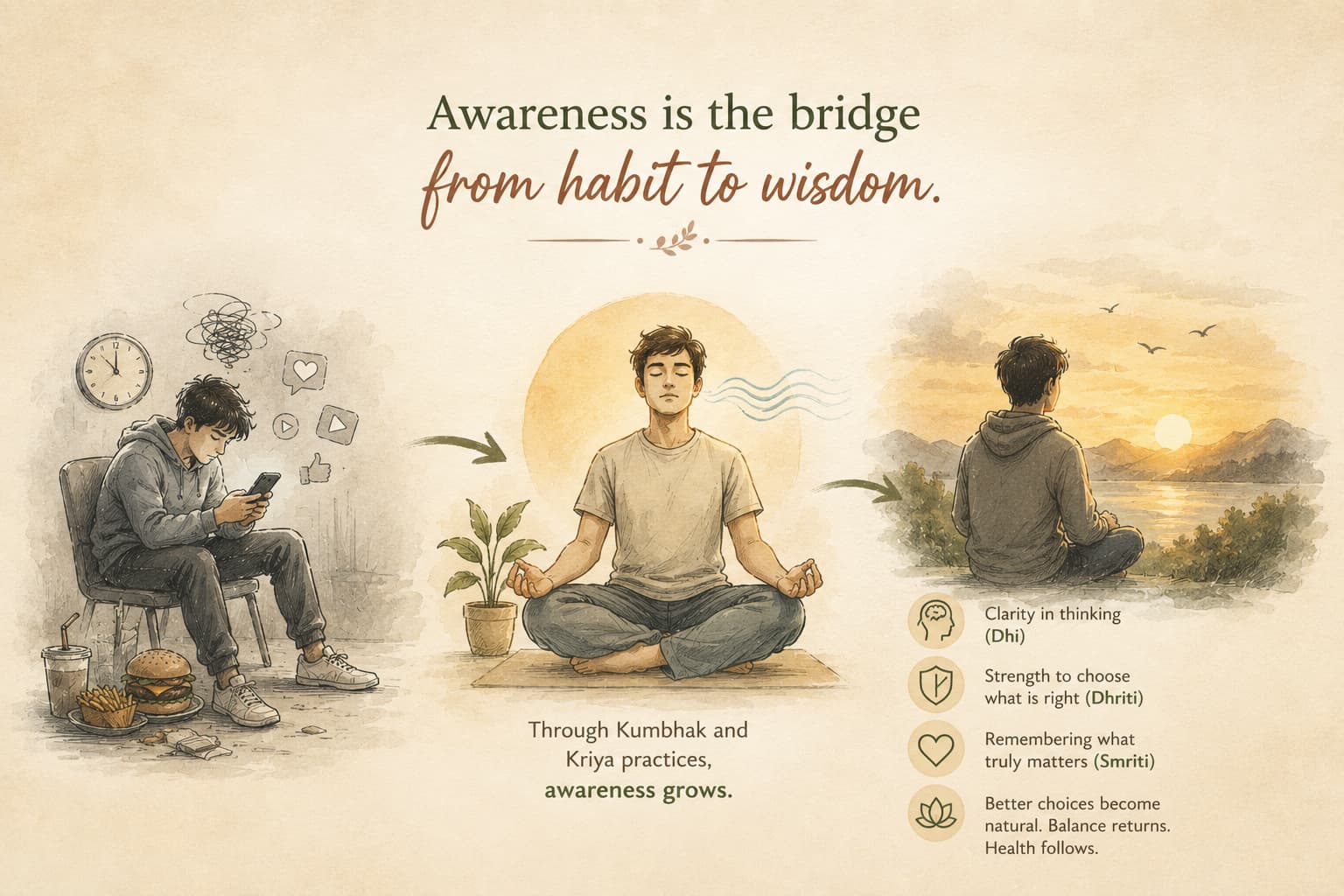
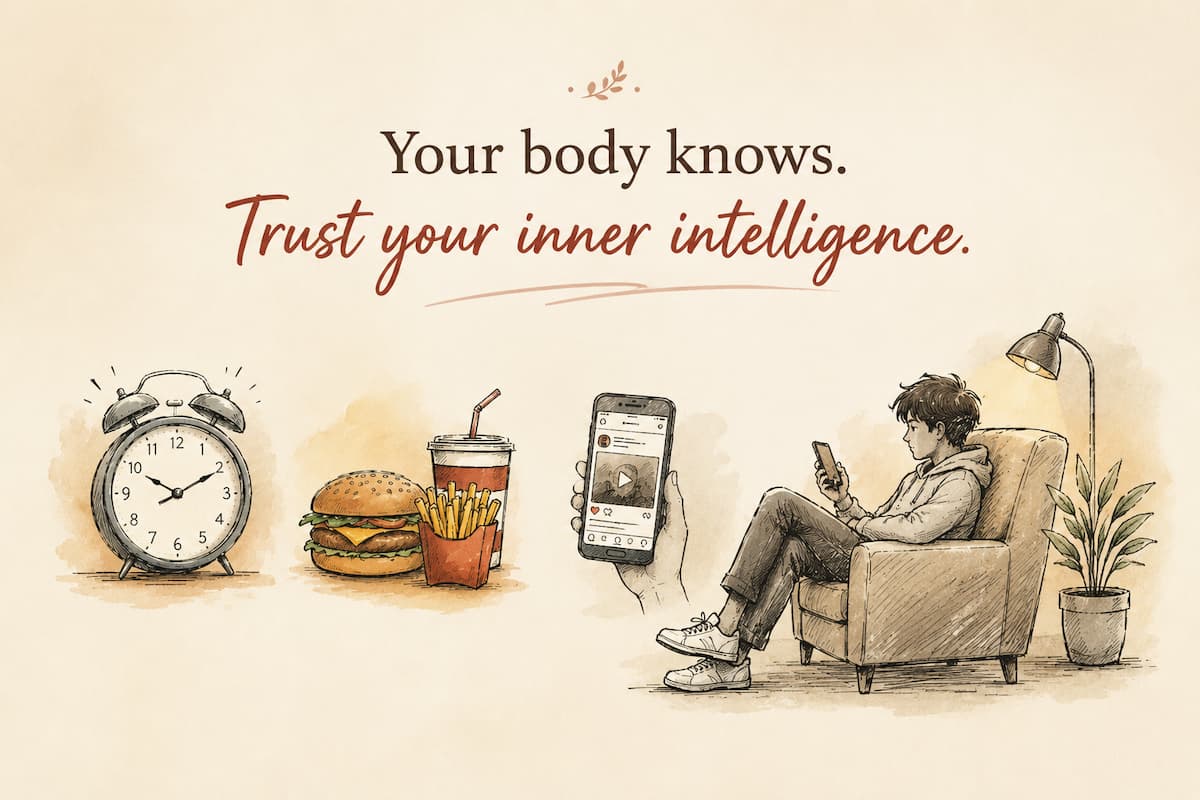
Our body is constantly communicating with us. It knows when it needs rest, when it needs movement, when digestion is disturbed, and when emotions are affecting our health.
The challenge is not that the body has stopped communicating; the challenge is

Most of us believe that disease begins in the body.
A pain appears.
Digestion becomes weak.
Sleep gets disturbed.
Energy levels drop.
But Ayurveda looks much deeper. Ayurveda explains that disease does not arise from a single cause.

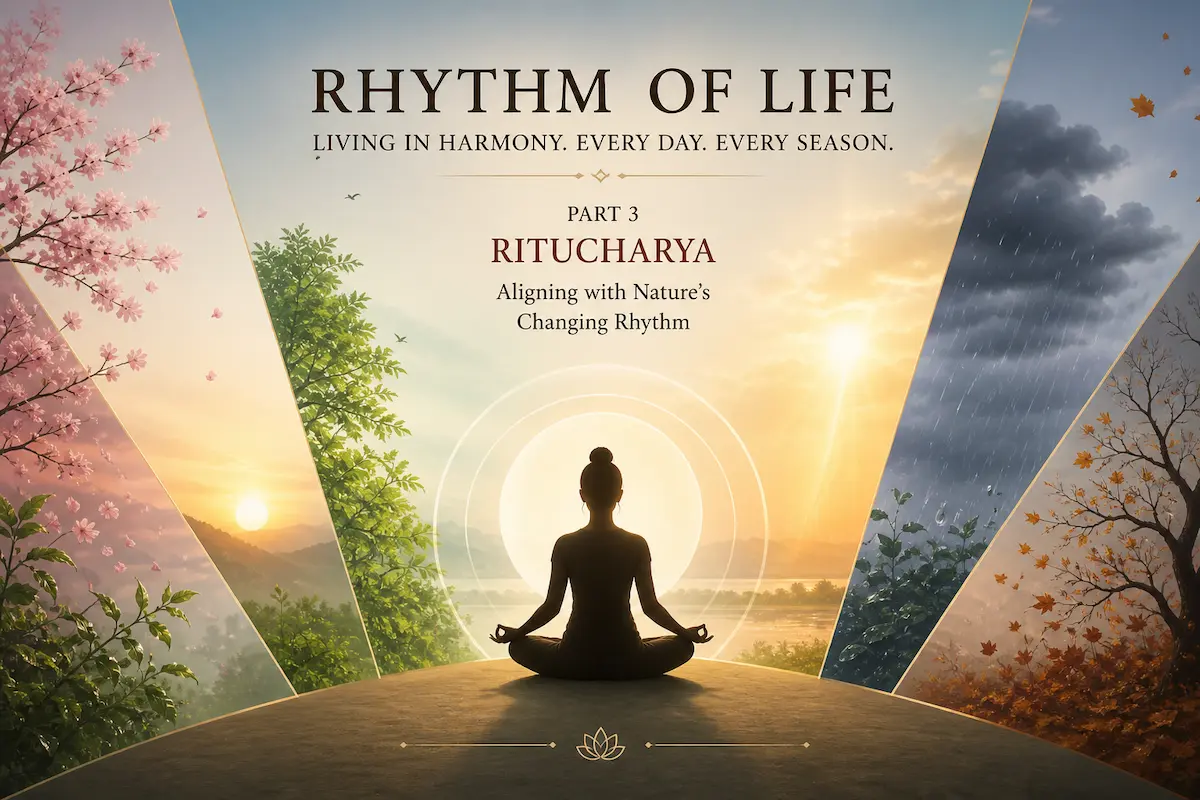
Ritucharya is the Ayurvedic practice of adjusting our diet (Ahara) and lifestyle (Vihara) according to the seasons.
• “Ritu” means season
• “Charya” means routine or way of living
Together, Ritucharya means “living in harmony with seasonal changes.”

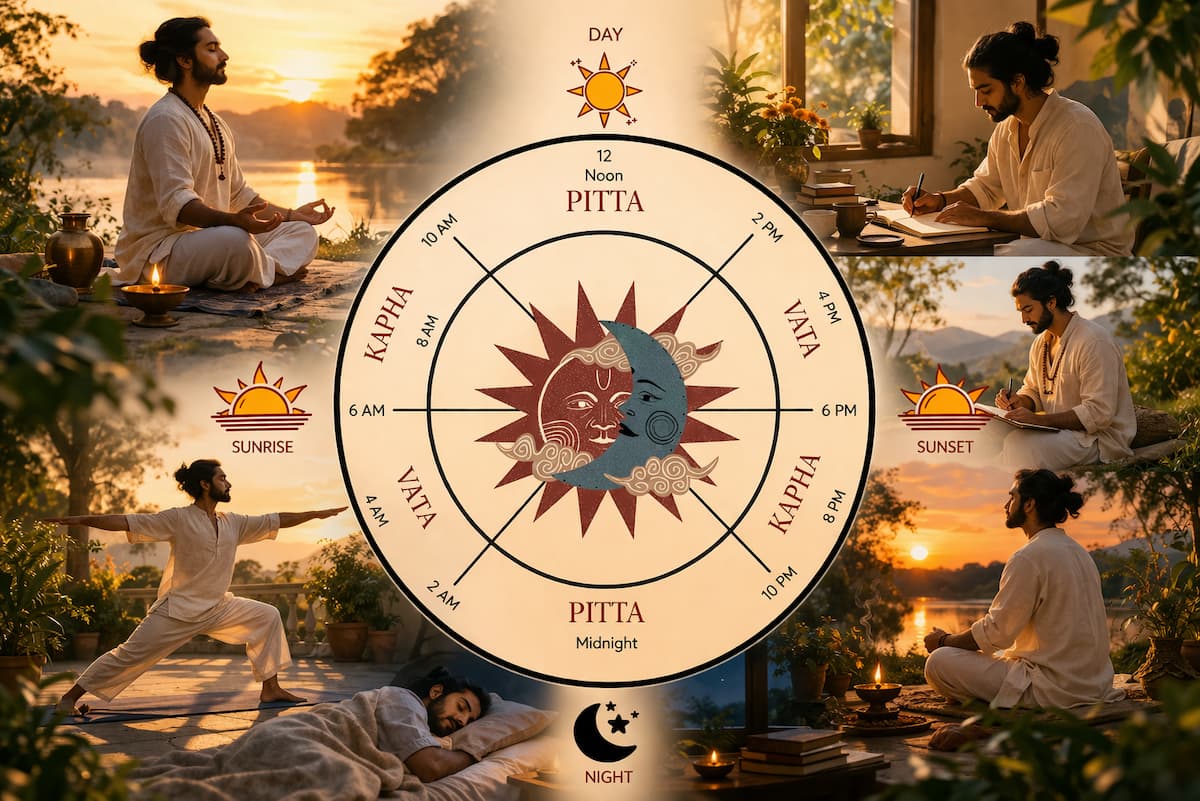
Dinacharya is an Ayurvedic concept that refers to a daily routine aligned with the natural cycles of the day.
• “Dina” means day
• “Acharya” means conduct or practice
Together, Dinacharya means “the right way of living each day.”

Living in rhythm is key to restoring balance and vitality. Modern lifestyles often disconnect us from nature’s cycles, affecting breath, energy, sleep, and mental calm. This article explores how rhythmic living and breath awareness help restore harmony, clarity, and natural well-being in daily life.

There is a simple truth that quietly governs our lives:
“Your energy goes where your focus goes.”
If your thoughts circle around problems, pain, fear or worry — your energy nourishes those very experiences. They grow stronger, heavier and more dominant.

In Ayurveda, food is never seen as mere calories or nutrition.
It is prāṇa — life itself.
And how we eat matters just as much as what we eat.
A beautiful shloka from the Charaka Samhita reminds us of this timeless truth:
“मात्राशी नाजीर्णं च जायते न च चिन्ता भय शोकाः।”

Modern medicine has done extraordinary things for humanity — from saving lives in emergencies to managing infections and surgeries. Many of us have, at some point, been grateful for medical care that helped us recover, stabilize, or simply feel safe.

If we pause for a moment and reflect, one truth becomes very clear — your body is alive, and it manages itself. Every heartbeat, every breath, every act of digestion or healing happens without your conscious effort. This itself tells us something profound: the body is a