

Part 2: Dinacharya – Returning to the Rhythm of Life
“नित्यं हिताहारविहारसेवी समीक्ष्यकारी विषयेष्वसक्तः ।
दाता समः सत्यपरः क्षमावानाप्तोपसेवी च भवत्यरोगः ॥”
(Nityam hitahara-vihara-sevi samikshyakari vishayeshvasaktah
data samah satyaparah kshamavan aptopasevi cha bhavati arogah)
This timeless wisdom from the Charaka Samhita (an ancient Ayurvedic text), defines the ideal lifestyle for health preservation and disease prevention. Ayurveda reminds us that health is not created through occasional effort, but through the way we live—every single day.
What is Dinacharya?
Dinacharya is an Ayurvedic concept that refers to a daily routine aligned with the natural cycles of the day.
- “Dina” means day
- “Acharya” means conduct or practice
Together, Dinacharya means “the right way of living each day.”
It is a structured yet intuitive way of organizing our daily activities—sleeping, eating, movement, cleansing, and rest—in harmony with nature’s circadian rhythms.
Rather than being a rigid schedule, Dinacharya is a framework for balance—helping regulate the doshas (Vata, Pitta, Kapha), strengthen digestion, stabilize energy, and prevent disease.
The Rhythm of the Day
In Part 1, we explored how losing rhythm leads to fatigue, restlessness, and imbalance.
Dinacharya brings that rhythm back—gently and naturally.
When daily life follows a natural rhythm:
- Energy becomes steady
- Digestion improves
- The mind becomes clearer
- The body no longer struggles
Understanding the Ayurvedic Clock
Each day flows through cycles of the three doshas—Vata, Pitta, and Kapha—repeating twice in 24 hours.
Day Cycle (Sunrise to Sunset)
- 6 AM – 10 AM (Kapha): Slow, grounded energy → ideal for movement and exercise
- 10 AM – 2 PM (Pitta): Strong digestive fire → main meal of the day
- 2 PM – 6 PM (Vata): Light, creative energy → thinking, planning, and focused work
Night Cycle (Sunset to Sunrise)
- 6 PM – 10 PM (Kapha): Slow down → light dinner and unwinding
- 10 PM – 2 AM (Pitta): Deep internal repair → best experienced in sleep
- 2 AM – 6 AM (Vata): Subtle clarity → meditation, breath, and reflection
When we consistently move against this rhythm—through late nights, irregular meals, or constant stimulation—the body gradually shifts out of balance.
Key Practices of Dinacharya
Dinacharya is not complicated. It is built on simple, consistent practices that gently support the body and mind.
1. Wake Before Sunrise (Brahma Muhurta) – This is the most sattvic time of the day—quiet, clear, and deeply supportive for meditation and breath practices.
2. Begin with Awareness – A moment of gratitude or prayer upon waking sets the tone for the day, shifting the mind from reaction to intention.
3. Cleanse and Awaken the Body
- Splash cool water on the face and eyes
- Cleanse the mouth and scrape the tongue to remove toxins (ama)
4. Hydrate Mindfully – Warm or room-temperature water/herbal tea in the morning:
- Stimulates digestion
- Supports elimination
- Awakens the system naturally
5. Oil-Based Practices (Abhyanga & Nasya)
- Self-massage nourishes tissues and calms the nervous system
- Nasal drops support clarity, breath, and mental focus
6. Movement, Breath, and Meditation
- Asanas and Vinyasa improve circulation and strength
- Breathwork regulates energy
- Meditation brings stillness and balance
7. Conscious Eating
- Eat the main meal at midday, when digestion is strongest
- Keep dinner light and early
- Eat with awareness rather than distraction
8. Evening Wind-Down – Lighting a diya at dusk marks the transition from activity to rest. It becomes a simple yet powerful reminder to pause, reflect, and turn inward. Reducing stimulation at this time prepares the body for deep, restorative sleep.
Dinacharya and Kumbhak Practice
With regular Kumbhak practice, the doshas begin to balance, and the body naturally aligns itself with a healthier daily rhythm. This happens by:
- Supporting digestion
- Enhancing detoxification
- Regulating sleep cycles
- Creating space for breath awareness
When the body is supported in this way, the breath deepens effortlessly.
Right routine → steady breath → inner balance → sustained health
Dinacharya is not about rigid discipline—it is about alignment. Even small shifts can begin to restore balance:
- Waking a little earlier
- Eating at consistent times
- Moving daily
- Practicing conscious breathing, as in Kumbhak kriyas
Over time, these simple changes reduce stress on the nervous system, strengthen digestion, and stabilize energy.
The Foundation of Well-Being – A steady daily rhythm becomes the foundation for:
- Balanced doshas
- Strong digestion and detoxification
- Better immunity
- Stable energy
- Mental clarity
More importantly, it creates a deeper connection with one’s own body and inner state.
Dinacharya aligns us with the rhythm of the day.
Health is not created by force, but through alignment.
When we begin to live in rhythm with breath, body, and nature, balance arises on its own.
And in that balance, life begins to flow effortlessly.
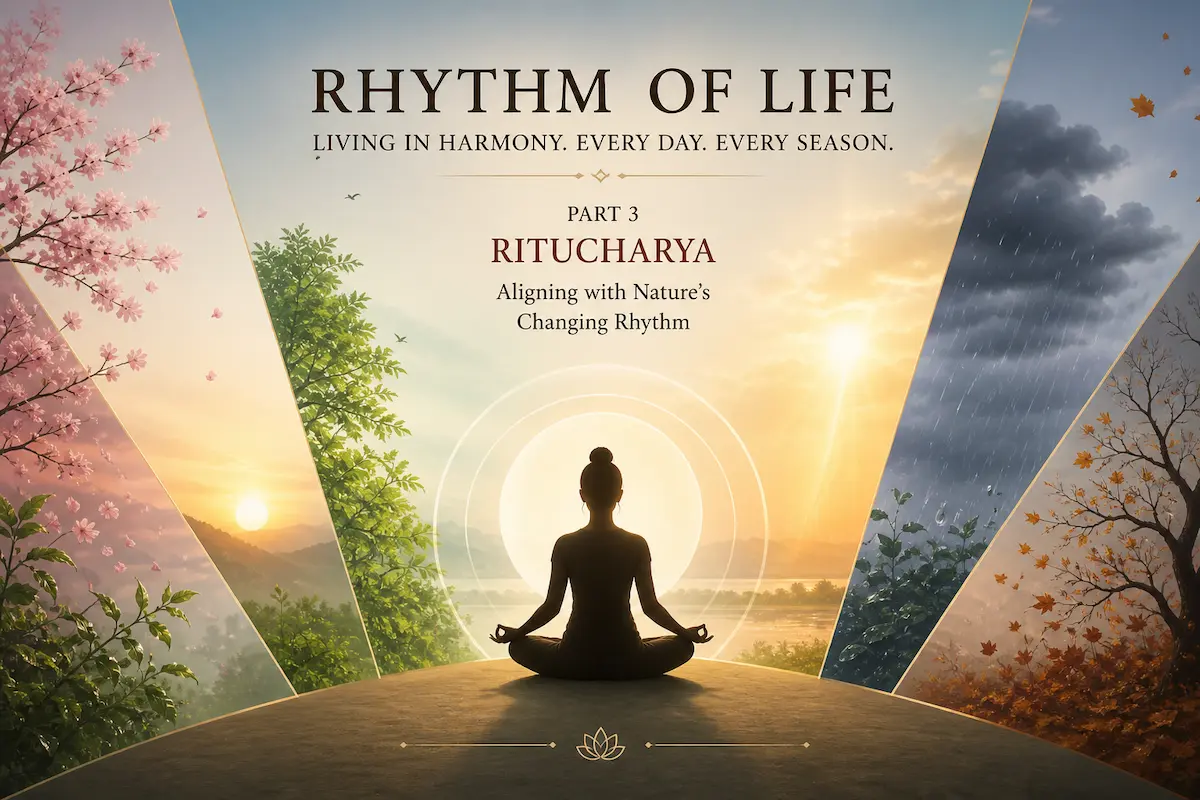
In the next part, we explore Ritucharya—aligning with seasonal rhythms to deepen resilience and long-term health.




25 Comments
Absuilty right je
True and absolutely right
Bilkul sahi kaha aapne ji
Beautifully articulated Neena ma’am! So clear with your thoughts … thank you 🙏😇
Agree to this and endeavour to follow dinacharya as described
However nearly sixty percent I am following but will try to raise my percentage
Very true
Very praiseworthy and useful message 👏💕💐🙏
Excellent sharing 🙏
Very well explained the importance of Dinacharya in our daily life and how it impacts our health 👌🙏
It is an interesting piece of information and helps us appreciate why our parents insisted on maintaining certain routines in our daily lives. This habit formation eases many things in life and we do it automatically.
Thank you Neenaji for the reminder and those of us who practice the Kriyas can see the benefits of Dinacharya which certainly sets a rhythm and brings back the balance and alignment that is of utmost importance for the daily functioning of our bodies.
As a disciplined and consistent practitioner of Kumbhak therapy I try to follow do acharya on a daily basis mindfully. My day starts with gratitude to our Guruji all mentors and guides who have helped me in this journey
Thank you so much for sharing this wonderful dincharya knowledge….i want to try this dincharya which will help me for my health 🙏
Very good thought process to improve health .Regular Practice is must.
Very well expressed and productive information.
Very correct Thanks
Well narrated.
As the adage goes, *practice* makes a person perfect and perfection has no limit.
Very good writeup with deep understanding the reasons for Dinacharya. Would appreciate what Part 1 was all about. Thanks a load for sharing.🙏Loved the post‼️🥰
Absolutely right thank you so much 🙏
Absolutely ryt & I’m trying my best to follow these routine.Re
Beautifully explained in simple terms
This is correct way of living. We have veered away from this system & are facing the consequences !
Thanks for the timely rap – I am getting back to this kind of life lived by my parents. They taught us but we had moved away from this discipline. Now AC by Swami Rajvibhuji & my mentor Anjali & all audio teachers have come to help me regulate my dinacharya to live a holistic life !!
Memories of childhood discipline & AC practise is helping me get back to more rhythmic living.
Gratitude 🙏
This is correct way of living. We have veered away from this system & are facing the consequences !
Thanks for the timely rap – I am getting back to this kind of life lived by my parents. They taught us but we had moved away from this discipline. Now AC by Swami Rajvibhuji & my mentor Anjali & all audio teachers have come to help me regulate my dinacharya to live a holistic life !!
Memories of childhood discipline & AC practise is helping me get back to more rhythmic living.
Gratitude 🙏
Good.
Being a yoga practioner for several years,one naturally follows this rhythem but the message is conveyed in a sequential manner with an emphasis on the spiritual aspect which is so important. Thank you for the writeup worth saving as a hard copy
This is what we practiced daily , as we grew older …with higher education n modern methods we forgot many things in order to cope with changing times.
We need to get back to them again.